
When you’re shopping for a reliable daily driver, you don’t want to blow your budget or end up with a car that’s already on its last legs. By tapping into tools like stat.vin, you can check vehicle history, spot red flags, and avoid unpleasant surprises. In today’s U.S. used-car market, finding an inexpensive car for daily driving requires more than browsing classifieds—it takes strategy, patience, and informed decision-making.
Why buying an affordable used car makes sense
In a market where new-car prices keep rising, opting for a well-chosen pre-owned vehicle is a smart move. The used-car market gives you access to models that were once expensive but now offer strong value at a much lower price. The key is matching your needs with market realities.
For daily driving—commuting, errands, school runs—you need something dependable, fuel-efficient, and low-maintenance. A budget-friendly used vehicle with a strong reputation for reliability can serve you well for years, while buying too cheap often leads to high repair bills and constant frustration.
Define your budget and realistic expectations
What “inexpensive” really means in today’s used-car market
The word “inexpensive” is highly relative. It depends on region, vehicle condition, and market trends. A “budget commuter vehicle” that cost $4,000 a few years ago may now start at $6,000–$8,000. Many buyers shopping under $10,000 need to factor in age, mileage, and maintenance records. Setting a realistic range—say $5,000–$10,000 for older models or $10,000–$15,000 for more recent ones—helps you shop efficiently.
How to balance purchase price with running costs
Don’t focus solely on the purchase price. A cheaper car may come with trade-offs: higher mileage, older components, or upcoming maintenance needs. Running costs—insurance, fuel, taxes, and repairs—often outweigh the initial price over time. Use affordability calculators or ownership-cost tools to estimate monthly expenses, not just the upfront payment. A clear budget prevents overspending and ensures long-term financial comfort.
Choose the right type of car for daily commuting
Your daily driver should fit your routine—city traffic, highway cruising, tight parking, varying weather conditions. Compact sedans and hatchbacks often hit the sweet spot for cost, efficiency, and reliability. A modest crossover may work too, but keep fuel consumption and maintenance costs in mind.
Look for cars with a proven reliability record, widely available parts, and reasonable mileage. Avoid older luxury models or niche vehicles, which may come with expensive upkeep. Above all, prioritize practicality and condition. A clean vehicle history report is non-negotiable.
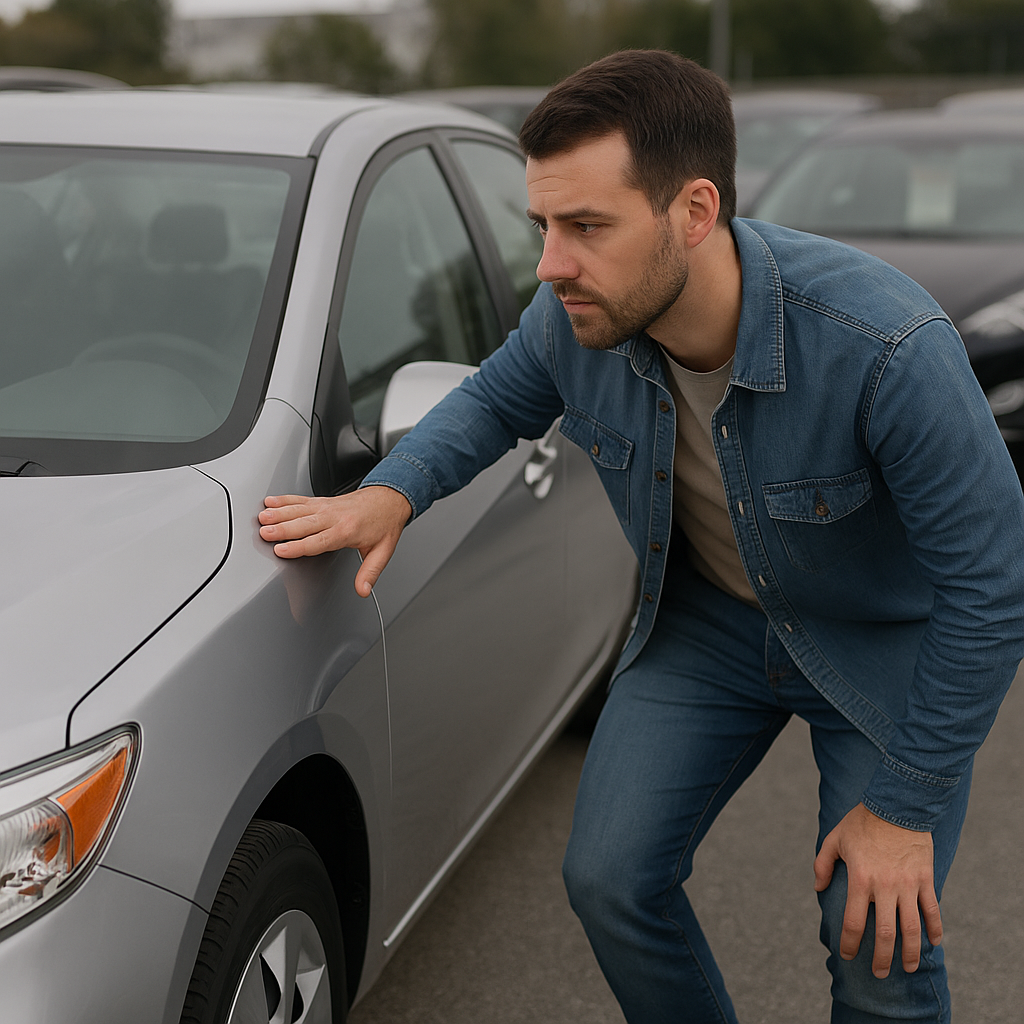
Essential checks before you commit
Before paying for any used vehicle, follow this essential checklist to reduce risks:
- Vehicle history report: Check title status, accident history, prior owners, and any odometer inconsistencies.
- Mechanical inspection: Have a trusted mechanic evaluate the engine, suspension, brakes, and electronics.
- Mileage vs. condition: Higher mileage isn’t bad if maintenance is consistent. Low mileage with poor upkeep is worse.
- Repair estimates and parts availability: Some vehicles have cheap, easily accessible parts; others are notoriously costly.
- Running-cost review: Understand fuel economy, insurance premiums, and any major upcoming maintenance.
Skipping these steps can turn an inexpensive purchase into a financial headache.
Negotiation and closing the deal in the used-car market
Negotiation in the U.S. used-car market relies on preparation. Compare listings, understand the fair market value, and avoid emotional decisions. Tools from KBB or Edmunds help define realistic pricing.
Some negotiation tips:
- Ask for the full “out-the-door” price, including taxes and fees.
- Don’t base decisions on monthly payments alone—dealers may manipulate terms.
- Be ready to walk away. There are always more cars to choose from.
- Shop during slower periods—end-of-month or end-of-year deals may be better.
Driving smart after purchase to maximize value
Once you’ve bought your inexpensive daily driver, protect your investment:
- Follow the maintenance schedule consistently.
- Set aside a repair budget for unexpected issues.
- Keep service records organized—they help with future resale value.
- Make small improvements such as new tires or fresh fluids to maintain safety and reliability.
- Monitor long-term operating costs and adjust your driving habits to reduce wear.
Conclusion: Making the most of your affordable used car
Choosing an affordable used car for daily driving in the U.S. does not mean compromising on reliability or comfort. With the right preparation—budgeting wisely, prioritizing reliability, running thorough checks, and negotiating smartly—you can secure a dependable daily commuter without overspending. Using tools like stat.vin to assess vehicle history helps you avoid common pitfalls. A budget-friendly car can be a practical, confident choice when approached thoughtfully.