
Table of Contents
Understanding Tamper-Proof Screws
Tamper-proof screws, often referred to as security screws, are engineered to prevent unauthorized access with their unique head patterns, ensuring that only those with specialized tools can install or remove them. For anyone looking to safeguard equipment, installations, or infrastructure against theft and vandalism, tamper-proof screws offer a proactive, reliable choice. Industry leaders like Bryce Fastener specialize in innovative screw solutions that address a range of security needs, from public infrastructure to consumer electronics.
The key difference between tamper-proof screws and standard fasteners is the complexity of their heads. Most traditional screws can be removed with commonly available tools, making assets vulnerable. Security screws, on the other hand, make unauthorized removal a complex, often time-consuming challenge, which significantly reduces the likelihood of theft or tampering.
Key Benefits of Using Tamper-Proof Screws
- Enhanced Security: Tamper proof screws restrict access and provide an additional layer of defense wherever they’re used, reducing liabilities and the need for frequent repairs.
- Theft Deterrence: By making unauthorized removal extremely difficult, these screws serve as a powerful deterrent for opportunistic thieves and vandals.
- Durability: Typically manufactured from robust materials like stainless steel, these screws offer long-lasting protection, even in harsh outdoor or high-traffic environments.
As the risk of opportunistic theft and vandalism continues to grow in public spaces and commercial settings, the value proposition for tamper-resistant fasteners has never been more straightforward. Specialist designs mean peace of mind for property managers, municipal authorities, and business owners alike.
For a comprehensive discussion of common challenges and solutions for tamper-proof screws, readers can explore this helpful resource that outlines functional performance and security concerns.
Property crime is a persistent issue across communities, driving greater demand for effective deterrence solutions such as tamper-proof screws. Their effectiveness does not stem solely from their complexity but also from the psychological barrier they create—thieves are much less likely to attempt theft when faced with obstacles that signal resistance.
Common Applications Across Industries
The adaptability of tamper-proof screws makes them valuable in a wide range of industries. Here are some critical use cases:
- Public Infrastructure: Municipalities employ tamper-resistant fasteners to secure streetlights, public benches, and traffic control devices against theft and vandalism, helping to reduce service disruptions and repair costs.
- Electronics: Manufacturers use tamper-proof screws to secure internal components. This prevents user tampering and ensures product warranties remain valid, a critical factor for high-value tech devices.
- Automotive: Fastener security extends to automobiles, where license plates, registration tags, and removable vehicle accessories are common targets for theft. As highlighted by a 1News report, police have urged drivers to adopt tamper-proof license plate screws to combat rising vehicle-related crimes. Security screws make these items much harder to steal or fraudulently swap, providing an effective and low-cost deterrent.
- Healthcare and Retail: Medical devices and point-of-sale terminals are also targets for tampering or theft. Tamper-proof screws provide an affordable way to safeguard investments in high-use areas.
Many government and private organizations also deploy tamper-resistant fasteners at utility sites and communications networks to protect vital infrastructure from sabotage—a growing concern according to reports from The New York Times.
Types of Tamper-Proof Screws
Security needs vary by application, so there is no one-size-fits-all solution for tamper-proof screws. Each variety is engineered for specific deterrence requirements:
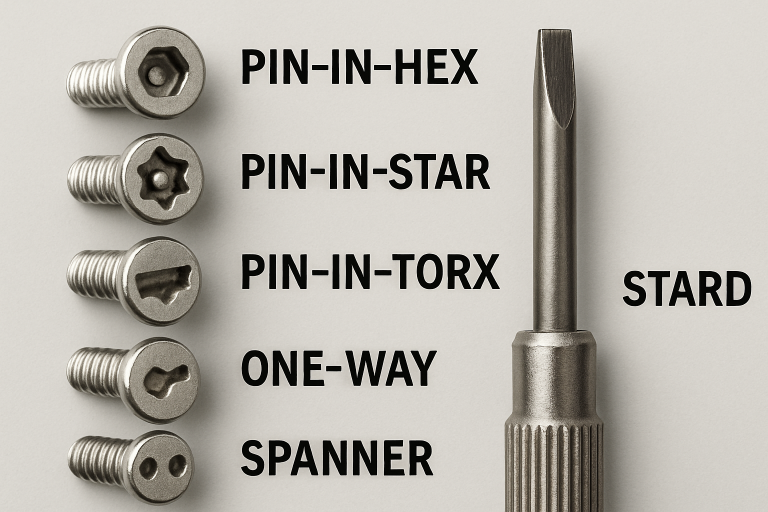
- One-Way Screws: These can be installed using a standard screwdriver but are designed to be extremely difficult to remove, making them ideal for semi-permanent installations.
- Security Torx: These feature a central pin that prevents the use of standard Torx drivers, requiring a special tool for installation and removal.
- Pin-in-Hex Screws: With a central pin embedded in a hexagonal recess, these screws provide enhanced security for critical applications where tampering must be minimized.
- Custom Designs: Advanced manufacturers provide proprietary heads and driver systems that cannot be replicated or purchased off the shelf, maximizing security.
Installation Best Practices
To get the most value from tamper-proof screws, following correct installation protocols is critical:
- Use Appropriate Tools: Specialty bits or drivers matched to the screw design are essential for damage-free installation and removal.
- Proper Alignment: Correctly aligning the screw during installation minimizes the risk of stripping the head, ensuring maximum holding strength and tamper resistance.
- Consistent Torque: Applying uniform pressure with a calibrated screwdriver or drill helps avoid over-tightening, which can weaken the screw, or under-tightening, which can compromise security.
Ensuring installers are familiar with best practices and have the right equipment is an important step that should not be overlooked, particularly for large-scale projects or high-value locations.
Real-World Effectiveness
Case studies show a significant drop in theft and vandalism rates following the adoption of tamper-proof screws. For example, cities that have retrofitted public play areas and park benches with security fasteners have reported fewer incidents of equipment damage and lower maintenance costs. In the private sector, retailers have seen similar benefits in loss prevention when securing shelving, electronics displays, and valuable hardware assets.
These results are echoed by security experts, who consistently highlight the return on investment from installing tamper-resistant hardware—not only in reduced losses but also in a public display of proactive risk management.
Conclusion
Integrating tamper-proof screws into your security strategy is a smart, preventative measure that can deliver substantial cost savings and peace of mind. With multiple types to choose from and broad applicability across industries, tamper-resistant hardware is a trusted solution for protecting your assets, reducing liability, and demonstrating a commitment to safety and security in any environment.