
Work environments today increasingly rely on tools that foster both efficiency and safety. Rolling ladders are prime examples of this evolution, as they bring together stability and mobility in ways that address modern workplace challenges. Whether in warehouses or on aircraft hangar floors, these ladders provide a safer alternative to step stools or stationary ladders by enabling workers to access elevated spaces securely.
The introduction of rolling ladders across various industries has improved operations and reduced slips and falls, ensuring safety and productivity. Their mobility decreases trips, while their durable design supports use in critical environments. Additionally, rolling ladders are cost-effective, reducing accident risk and lowering insurance expenses. They are versatile, applicable in settings such as warehouses, libraries, retail stores, and aviation facilities, thereby enhancing workflow and safety culture through reliable access to various heights.
Table of Contents
Enhancing Safety in the Workplace
Creating a genuinely safe workspace requires the proactive integration of advanced equipment. Rolling ladders excel by offering stable, slip-resistant platforms, robust handrails, and locking casters. According to the Centers for Disease Control and Prevention (CDC), falls from ladders account for a significant percentage of workplace injuries each year. Rolling ladders address this by maximizing stability during ascent, descent, and while reaching for objects on higher shelves.
The design of rolling ladders ensures workers are less likely to overreach, a risky practice often associated with traditional ladders. Secure, ergonomic handrails and steps decrease the potential for error and minimize fatigue, reducing the probability of accidents during repetitive tasks.
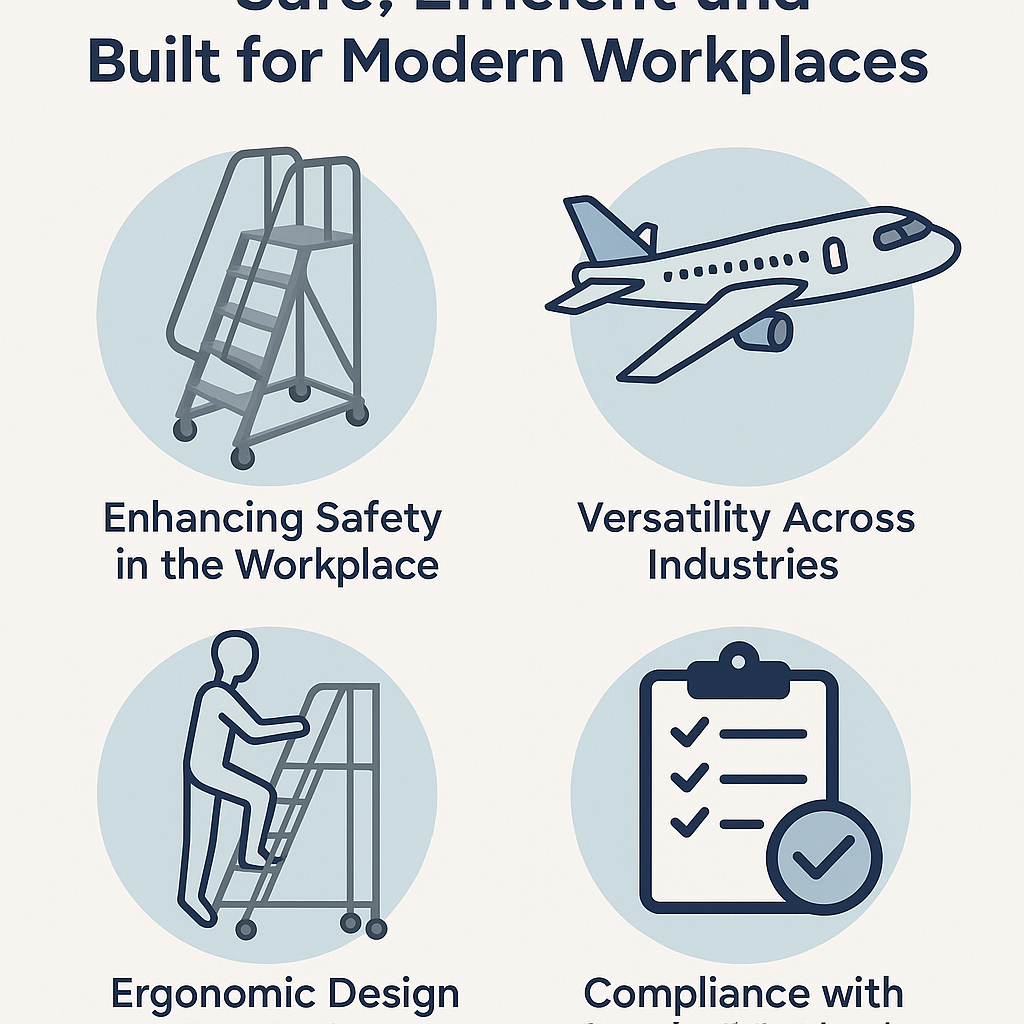
Versatility Across Industries
One of the most valuable characteristics of rolling ladders is their adaptability. In the aviation industry, for example, technicians depend on specialized rolling ladders to inspect and maintain aircraft safely and efficiently. Each ladder is tailored to suit the demanding environment, ensuring maintenance crews can access the wings, fuselage, and engines with confidence.
Warehouses utilize rolling ladders to provide employees with secure access to products stored on upper shelving. In manufacturing environments, rolling ladders streamline assembly and quality control processes by facilitating easy movement between workstations. Their applications even extend to retail, where staff move seamlessly between displays and stock areas, minimizing downtime and the risk of injury.
Ergonomic Design Features
Modern rolling ladders are engineered with worker health and comfort in mind. Features such as adjustable height mechanisms and wide, slip-resistant treads cater to repetitive use while minimizing fatigue and physical strain. Many models offer gentle slopes, easy-to-use brakes, and lightweight maneuverability. These factors contribute not only to fewer workplace injuries but also to increased efficiency—workers can use rolling ladders without constant readjustment or worry about stability.
Furthermore, advances in ergonomic engineering ensure the designs fit a range of body types and job functions. Steps are evenly spaced to facilitate natural motion, and handrails are positioned for optimal support, thereby reducing the ergonomic risks associated with reaching or awkward body movements.
Compliance with Safety Standards
Rolling ladders designed and maintained in accordance with OSHA and ANSI standards create a culture of accountability and diligence. Products that comply with established safety protocols not only help organizations avoid costly fines but also reinforce their commitment to protecting workers. Businesses must ensure that all platforms meet these rigorous standards, undergo regular inspections, and receive maintenance checks to confirm their ongoing integrity and safety.
Implementing Rolling Ladders in Your Workspace
Integrating rolling ladders effectively begins with a clear assessment of your operational needs. Consider the task types, ceiling height, available floor space, and the required mobility of the ladder. Selection should prioritize the right mix of size, height, durability, and safety features tailored to the work environment. Engaging with certified suppliers and consulting experienced staff are recommended steps to ensure optimal integration, as adopting the right solutions can significantly boost efficiency and safety for all employees.
Maintenance and Care
Like any workplace equipment, rolling ladders benefit from routine care and maintenance. Inspecting wheels, checking for structural damage, and verifying that locking mechanisms function as expected are all essential yet simple steps. Periodic professional checks and timely repairs extend the ladder’s service life and safeguard employees from potential hazards arising from neglect or wear.
Conclusion
Rolling ladders provide indispensable support for safe, efficient, and productive environments across a wide array of industries. Their innovative design, ergonomic benefits, and compliance with safety standards underscore their critical role in modern workplaces. Choosing the appropriate ladder model and maintaining it diligently ensures that businesses can protect their workforce while enhancing day-to-day operational success.