Car buyers today face a growing choice: should you go with a hybrid or take the plunge with a fully electric vehicle (EV)? Each option presents compelling advantages and unique factors to weigh as you search for a model that fits your daily life. Whether you’re motivated by cost savings, environmental impact, or driving habits, it is crucial to make a well-informed decision.
Both hybrids and electric vehicles (EVs) are designed to lower emissions and reduce operating costs compared to traditional gas-powered cars, yet they achieve these goals in different ways. Recognizing how each option functions and performs can help you choose a vehicle that aligns with your lifestyle and long-term needs. By comparing their advantages and potential drawbacks, you can better assess which technology suits your driving habits and budget. Learn more about their features and differences to make a confident and informed decision for your next purchase.
Consider upfront costs, charging convenience, available incentives, and your long-term plans. Your selection not only impacts your budget but also helps shape a more sustainable future. By looking at the big picture, you can weigh both your personal and environmental goals.
Making the right choice is a significant decision, so it is essential to consider reputable resources along the way. For a detailed breakdown of hybrid and electric vehicle ownership costs, refer to this Kelley Blue Book overview.
Table of Contents
Understanding Hybrids and EVs
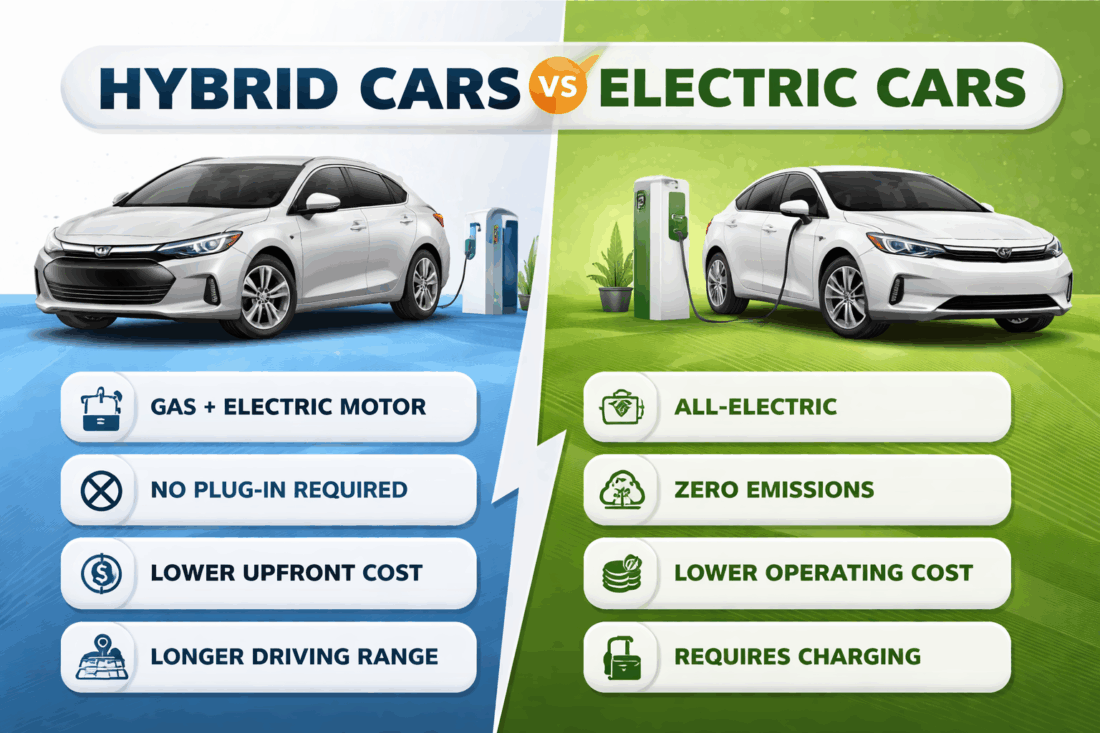
Hybrids use a combination of a traditional gasoline engine and an electric motor, automatically switching between the two power sources to optimize fuel efficiency. These vehicles do not require you to plug them in, as their batteries are charged through regenerative braking and the combustion engine itself. In contrast, electric vehicles run exclusively on electricity, stored in large batteries that must be plugged in and recharged from an external power source, such as a home outlet or a public charging station.
While hybrids offer a familiar driving experience and the convenience of quick gasoline refueling, EVs deliver smooth, silent rides with instant acceleration but require access to reliable charging infrastructure. The technology behind each of the most significant types is rapidly evolving, with advances making them both more appealing and widely available than ever before.
Cost Considerations
Upfront Costs
Hybrids generally cost less to purchase than most new vehicles. That said, the gap is closing quickly as battery technology improves and manufacturers expand their electric lineups. Many hybrids are priced competitively with their gasoline-only counterparts, making them accessible for first-time buyers.
Operating Costs
One of the main selling points of EVs is the long-term savings they offer. Electricity is usually less expensive than gasoline, and these vehicles have fewer parts that require maintenance. Owners spend less on oil changes, brake repairs, and other repairs to drive hundreds of miles between refueling stops on conventional cars. However, they still require maintenance for both the electric drive and the gasoline engine. According to a recent analysis from Kelley Blue Book, EVs tend to have an edge in total ownership costs over time, especially as purchase prices decrease and battery lifespans increase.
Environmental Impact
Reducing emissions is a significant motivation for switching from gas-powered vehicles. Hybrids minimize greenhouse gas emissions compared to traditional vehicles, but because they still burn gasoline, they still produce tailpipe emissions. The biggest environmental benefit is seen in city driving, where hybrids spend more time running on electric power.
EVs generate zero tailpipe emissions, dramatically reducing their carbon footprint. When accounting for the full picture, including manufacturing and electricity generation, EVs typically offset their initial production impact within just a few years of regular use. On average, they emit at least 50 percent fewer emissions over their lifespans, according to a New York Times analysis. As renewable energy sources continue to expand, the environmental benefits of electric vehicles are set to increase further.
Driving Range and Infrastructure
Hybrid cars offer two sources of energy, allowing you to easily drive hundreds of miles between refueling stops. This makes them ideal for long-distance travelers and for people without home charging access. There is no need to worry about finding a charging station on a road trip; a standard gas pump will suffice.
EVs have varying ranges depending on the model, but many can now travel more than 200 miles on a full charge. Although the charging infrastructure is expanding in cities and along highways, some regions still lack widespread access to fast-charging stations. If you frequently travel long distances or live in an area with limited charging options, consider these factors in your decision.
Maintenance and Reliability
Hybrids feature both an internal combustion engine and an electric system. Over time, this can mean more complex maintenance compared to a standard gas car or a pure EV. They require oil changes, exhaust system repairs, and other upkeep, just like traditional vehicles, in addition to the battery system.
In contrast, electric vehicles have far fewer moving parts, minimizing the chances of breakdowns and reducing long-term maintenance needs. However, EV batteries are costly to replace, and their performance may degrade over time. According to a recent Consumer Reports survey, EV reliability is improving, but it is still not quite on par with high-quality hybrid models.
Incentives and Rebates
Government incentives can significantly reduce your out-of-pocket costs. Previously, the U.S. federal government offered tax credits up to $7,500 for new EVs and $4,000 for used models. However, as of September 30, 2025, these federal tax credits have ended. Some states and local governments continue to offer rebates or credits for qualifying vehicles, so it is wise to check for up-to-date incentives in your state or city. Details can be found in recent news from the Associated Press.
Making the Right Choice
The decision between a hybrid and an electric vehicle ultimately depends on your priorities and situation. If you rely on long road trips or live in a region without convenient charging infrastructure, a hybrid may offer the best balance of versatility and efficiency. If you have a predictable daily route, access to charging at home or work, and want to maximize your contribution to cleaner air, an EV is likely the more sustainable and cost-effective option for you.
Choosing the right car is a decision that will affect both your budget and your environmental footprint for years to come. By carefully considering upfront costs, long-term savings, available incentives, and practical day-to-day needs, you can make a choice that supports your lifestyle and aligns with your values.