The bail system plays a crucial role in modern society by striking a balance between ensuring court appearances and upholding the principle of presumed innocence. When an individual is arrested, a judge may set a monetary amount that allows them to be released from custody while awaiting trial. This system is intended to prevent unnecessary pretrial detention while also providing an incentive for defendants to appear in court. Understanding how bail works helps shed light on the broader workings of the criminal justice system and its impact on both individuals and communities.
In practice, many people rely on the assistance of a local bail bondsman to navigate the process efficiently. These professionals act as intermediaries, helping defendants secure release when immediate payment of the full bail amount may not be feasible, allowing them to continue their daily lives while preparing for court proceedings.
Table of Contents
What Is Bail?
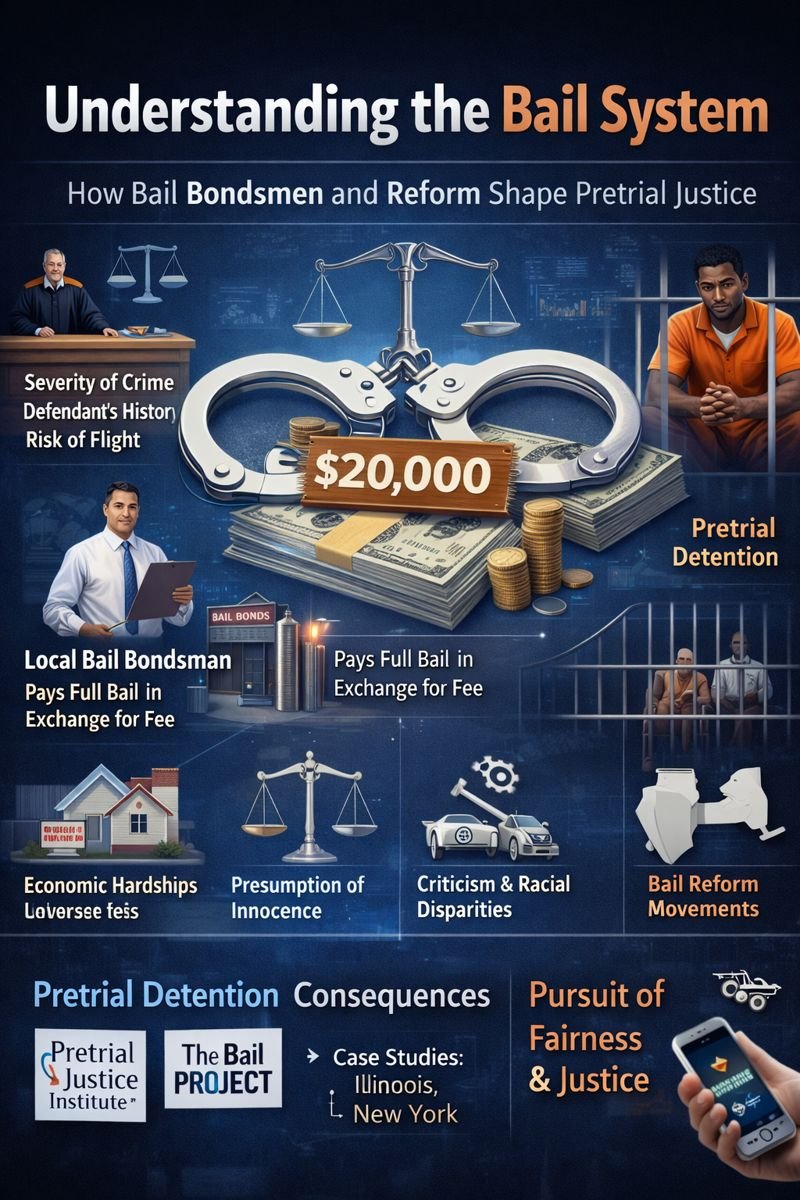
Bail is a legal provision that allows accused individuals temporary freedom until their court date, provided they return for required hearings. Judges set bail amounts by weighing the severity of the alleged offense, the defendant’s prior criminal history, and the risk of flight. The sum acts as a guarantee; failure to appear in court can result in forfeiture. Critics note the system’s downsides, especially for low-income defendants who cannot readily afford payment, resulting in unnecessary pretrial incarceration.
Bail can be paid directly to the court; however, given the high costs associated with serious charges, most individuals cannot post the full amount themselves. Here, the system exposes a significant vulnerability for working families, who may be forced to borrow, liquidate assets, or face financial hardship.
The Role of Bail Bondsmen
When court-set bail amounts are prohibitive, many defendants or their families use bail bondsmen, professionals who post a bond—essentially, an insurance policy—guaranteeing the full bail. In exchange, the defendant pays the bondsman a non-refundable fee, typically 10% of the bail total. The bail bonds industry, in turn, has spurred the rise of bounty hunters—licensed agents hired to track down individuals who fail to appear in court. The authority and practice of bounty hunting vary by state, raising further legal and ethical debates.
This third-party system enables courts to manage high case volumes while providing a path to pretrial freedom for those who cannot afford to pay outright. Still, the reliance on commercial bail bondsmen and the resulting debt can trap defendants in cycles of financial instability, while sometimes giving rise to aggressive collection tactics.
Pretrial Detention and Its Consequences
Pretrial detention is the incarceration of individuals charged with a crime but not yet convicted. While in some cases it’s used to secure public safety or ensure attendance at future hearings, the broader consequences are profound and multifaceted:
- Presumption of Innocence: Retaining individuals before trial contradicts the notion that one remains innocent until proven guilty. Pretrial detainees, awaiting their day in court, face the same jail conditions as those who have already been convicted.
- Economic Disparities: Because cash bail is unaffordable for many, pretrial detention disproportionately impacts low-income individuals. The loss of jobs, interrupted schooling, and housing instability are common consequences.
- Racial Disparities: Numerous studies reveal that Black and Latino defendants are more likely to be detained pretrial and face higher bail amounts, deepening already existing social and economic gaps.
Bail Reform Movements
The inequities of cash bail have fueled a national movement for change. Organizations such as the Pretrial Justice Institute and The Bail Project campaign for a fairer pretrial process, advocating for non-monetary forms of release, risk assessments, and expanded community support. In several cities and states, these efforts have reduced jail populations and provided proof that alternatives can improve both public safety and court compliance rates.
Case Studies of Bail Reform
Recent years have brought sweeping changes in multiple jurisdictions:
- Illinois: In 2023, the state made history by abolishing cash bail under the Pretrial Fairness Act. The reform aims to make pretrial release decisions based on risk, rather than financial means, and is being closely watched nationwide for its outcomes and potential unforeseen challenges.
- New York: In 2019, the state eliminated cash bail for most misdemeanors and nonviolent felonies, aiming to reduce the number of people in jail. Modifications since then reflect pressures to balance reform with public safety, demonstrating the complex politics surrounding bail.
The Future of Bail in the U.S.
The nationwide conversation around bail is accelerating, with many states considering risk-based or non-monetary release systems. As research advances and initial reforms are evaluated, advocates hope for a justice system that balances both public safety and defendant rights. While some fear that ending cash bail could risk public safety, evidence from early adopters challenges this narrative, pointing instead to the benefits of equity-focused reforms.
Staying informed about bail practices and ongoing reforms helps promote fairness and justice at the local and national levels. As reform spreads, communities must remain vigilant, ensuring that new systems truly reflect the values of due process and equal protection under the law.