A calm lake can turn choppy within minutes, putting considerable strain on docks that were never designed for rough conditions. Waves, strong winds, and changing water levels can damage poorly built structures, sometimes after only a few severe storms. Finding the right boat dock builder means looking beyond attractive designs and affordable prices to understand how well a dock will hold up when the weather gets bad.
Table of Contents
- 1 Look for Experience Building Docks in Rough Water
- 2 Ask How They Handle Strong Waves and High Winds
- 3 Check Their Knowledge of Water Levels and Shoreline Conditions
- 4 Find Out What Materials They Use for Long-Lasting Docks
- 5 Ask How They Keep Docks Secure During Storms
- 6 Review Past Dock Projects in Similar Water Conditions
- 7 Make Sure They Understand Local Dock Rules and Permits
Look for Experience Building Docks in Rough Water
Building a dock on a sheltered shoreline differs from installing one along an open stretch of water. Exposed locations experience stronger waves, greater wind pressure, and repeated movement that can loosen connections or damage supporting structures. Builders familiar with these conditions understand why dock size, weight distribution, and anchoring methods must match the location.
Experience also involves knowing which designs work under specific conditions. Floating dock builders should explain how they assess wave exposure, boat traffic, and seasonal weather patterns before recommending a system. A contractor who uses the same design for every property may overlook problems that become expensive to fix later.
Ask How They Handle Strong Waves and High Winds
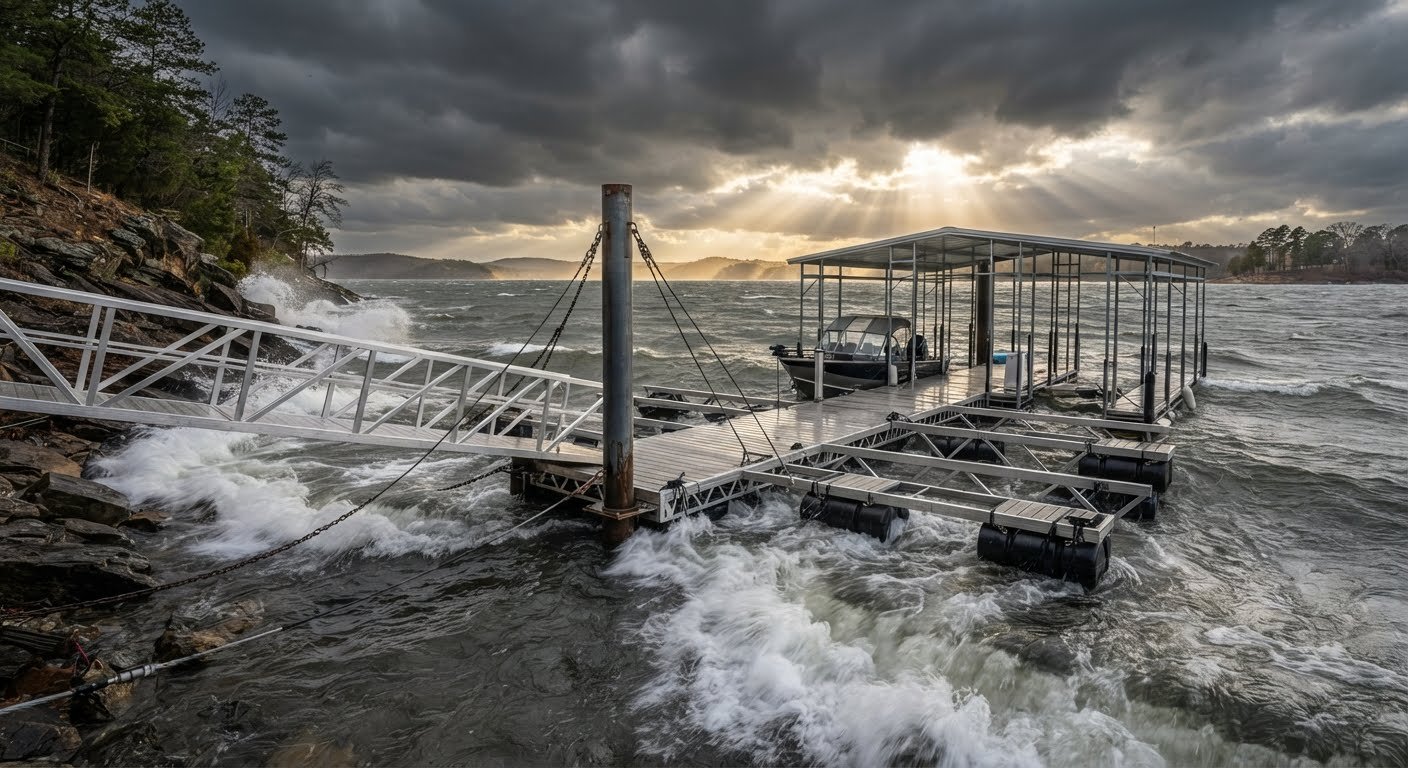
Waves place repeated pressure on dock frames, flotation units, and connections. Unlike a single heavy impact, thousands of smaller movements can gradually weaken poorly designed joints. Experienced builders account for these forces by selecting suitable structural members, secure connections, and flotation systems that provide adequate support without excessive movement.
Wind creates another challenge, especially for docks with roofs or covered boat slips. Larger roof surfaces catch more wind, increasing the forces transferred to the frame and anchoring system.
Contractors should explain how their designs handle these loads and whether the proposed dock has engineering documentation for the expected conditions. Heavy-duty aluminum boat docks can provide strong structural support, but their performance still depends on proper design and installation.
Check Their Knowledge of Water Levels and Shoreline Conditions
A dock that works perfectly during summer may become difficult to use when lake levels drop. Shoreline slopes, underwater obstacles, and changing water depths all affect dock placement and access. Builders need to understand these conditions before deciding whether a floating or fixed structure makes more sense.
For example, an aluminum floating dock can rise and fall with the water, helping maintain a consistent boarding height. However, its anchoring system must allow enough vertical movement without letting the dock drift too far from its intended position. Steep shorelines may also require longer gangways to maintain safe access during low-water periods.
Find Out What Materials They Use for Long-Lasting Docks
Material quality becomes particularly important where rough water repeatedly stresses dock components. Marine-grade aluminum offers corrosion resistance and a strong structure without the weight of many steel alternatives. Still, builders must choose suitable alloys, properly sized framing, and compatible hardware to prevent premature wear.
People comparing aluminum docks for sale should ask about more than the frame. Decking materials, flotation units, weld quality, and connection hardware all influence durability.
A well-built dock also needs parts that can be inspected and serviced without major disassembly. Aluminum docks may require less surface maintenance than wooden structures, but damaged flotation components and loose fasteners still need attention.
Ask How They Keep Docks Secure During Storms
Storm damage often begins with an anchoring problem rather than a failure of the dock frame. Strong winds and waves can pull against mooring lines, shift anchors, or overload attachment points. Builders should evaluate the lakebed, expected water-level changes, and forces acting on the structure before selecting an anchoring arrangement.
Different locations may require cables, piles, rigid arms, or combinations of these systems. No single method works for every shoreline.
Property owners should also ask what happens during unusually severe weather. A dependable builder can explain the system’s design limits, recommended inspections, and whether boats or removable accessories need additional protection before a storm.
Review Past Dock Projects in Similar Water Conditions
Photographs of completed docks can show workmanship, but they cannot reveal how a structure performs during rough weather. A better approach involves examining projects installed on similarly exposed shorelines, preferably ones that have been in service for several years.
References from previous customers can provide useful information about movement, repairs, and maintenance costs. Owners may also learn whether the builder addressed problems promptly after installation.
Anyone researching aluminum boat docks for sale should request examples that closely match the intended project. A large covered dock on a busy lake presents different engineering challenges than a small swimming platform in a protected cove.
Make Sure They Understand Local Dock Rules and Permits
Dock regulations can affect nearly every part of a proposed installation, from its distance off the shoreline to its overall dimensions. Depending on the location, property owners may need approval from local authorities, lake management agencies, or other organizations responsible for waterfront development.
Permit requirements may also limit roof heights, boat slip sizes, anchoring arrangements, and how far docks can extend into navigable water. Experienced builders should understand the approval process for their service area and identify which permits the property owner must obtain.
For waterfront projects involving changing water levels and demanding site conditions, Flotation Systems offers custom aluminum dock systems with several floating configurations and anchoring options. Its product range gives property owners a starting point for discussing shoreline conditions, dock layout, and structural requirements. Those details are worth reviewing before committing to a design, particularly where strong waves and frequent storms could affect the dock’s long-term performance.